Water Pipe Line: Complete Guide to Installation, Problems, Repair & Maintenance
Introduction
A water pipe line is a crucial component of any home, office, shop, or building, responsible for delivering clean water for drinking, cooking, bathing, washing, and cleaning. Without a well-designed pipeline system, issues such as water leakage, low pressure, and pipe damage can cause serious inconveniences and structural problems.
Many people tend to overlook minor pipe issues early on, but if ignored, these can lead to higher water bills, wall damage, and even weaken the building’s structure. Therefore, understanding how water pipelines function is essential for maintaining a safe and efficient water supply.
This guide explains everything about water pipe lines in simple terms—from the types of pipes and installation techniques to common problems, repair methods, maintenance tips, and the latest plumbing trends for 2025–2026.
What Is a Water Pipe Line and Why Is It Important?
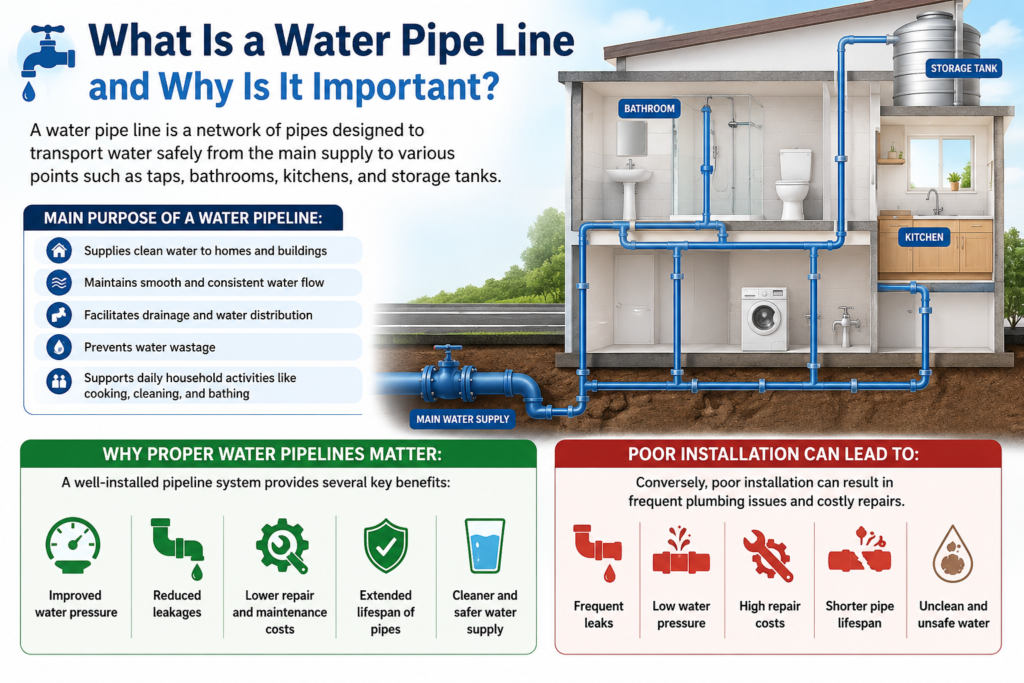
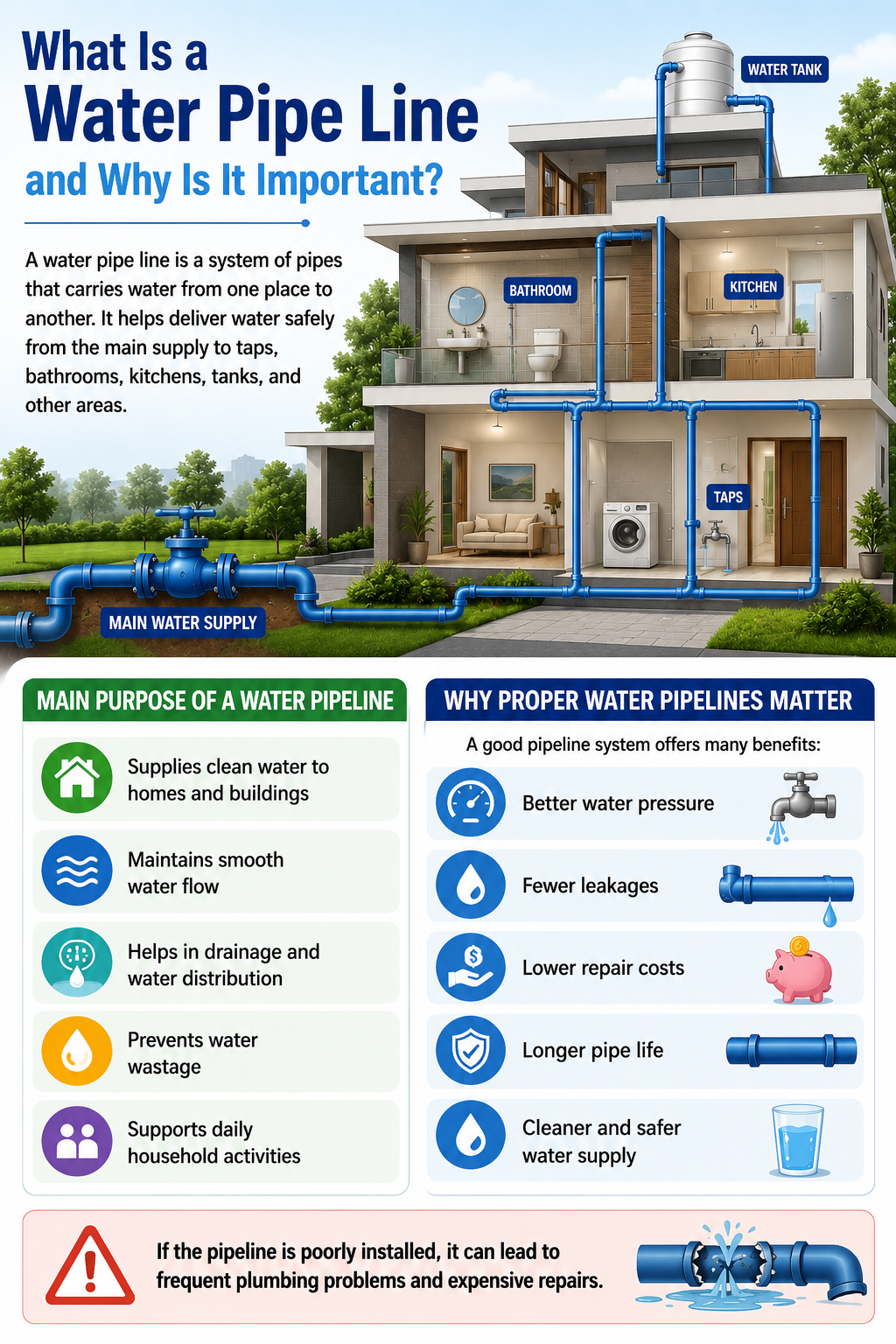
A water pipe line is a network of pipes designed to transport water safely from the main supply to various points such as taps, bathrooms, kitchens, and storage tanks.
Main Purpose of a Water Pipeline:
- Supplies clean water to homes and buildings
- Maintains smooth and consistent water flow
- Facilitates drainage and water distribution
- Prevents water wastage
- Supports daily household activities like cooking, cleaning, and bathing
Why Proper Water Pipelines Matter:
A well-installed pipeline system provides several key benefits:
- Improved water pressure
- Reduced leakages
- Lower repair and maintenance costs
- Extended lifespan of pipes
- Cleaner and safer water supply
Conversely, poor installation can result in frequent plumbing issues and costly repairs.
Types of Water Pipes Used in Modern Plumbing
Different types of pipes serve various purposes, and selecting the right pipe is essential for durability and optimal performance.
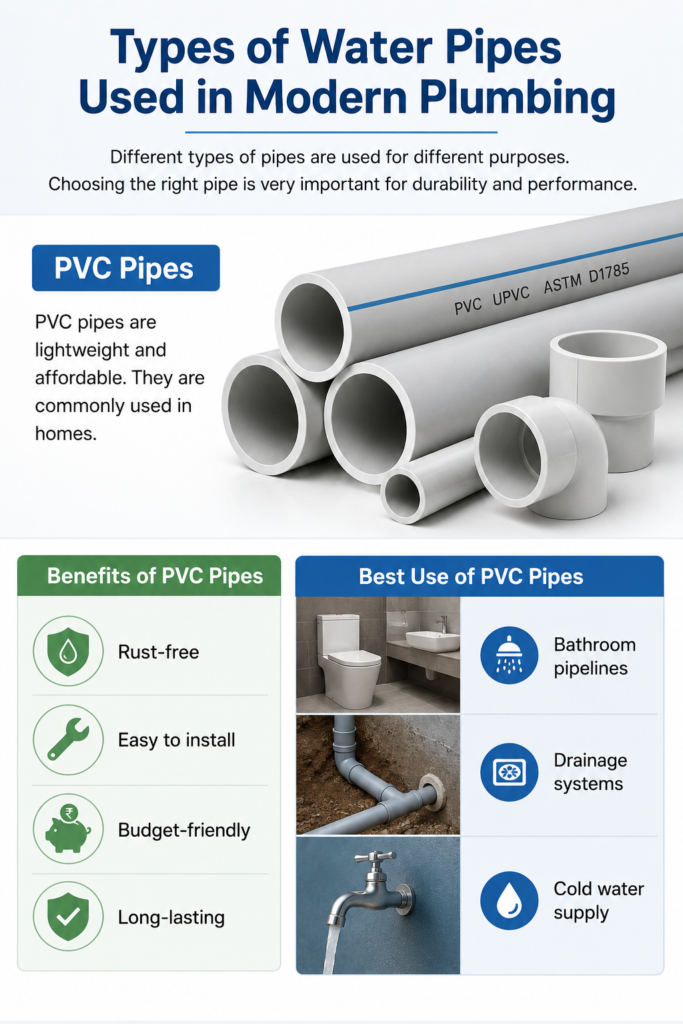
PVC Pipes
PVC (Polyvinyl Chloride) pipes are lightweight, affordable, and commonly used in residential plumbing.
Benefits of PVC Pipes:
- Rust-free and corrosion-resistant
- Easy to install due to light weight
- Budget-friendly option
- Long-lasting with minimal maintenance
Best Uses for PVC Pipes:
- Bathroom pipelines
- Drainage systems
- Cold water supply lines
CPVC Pipes
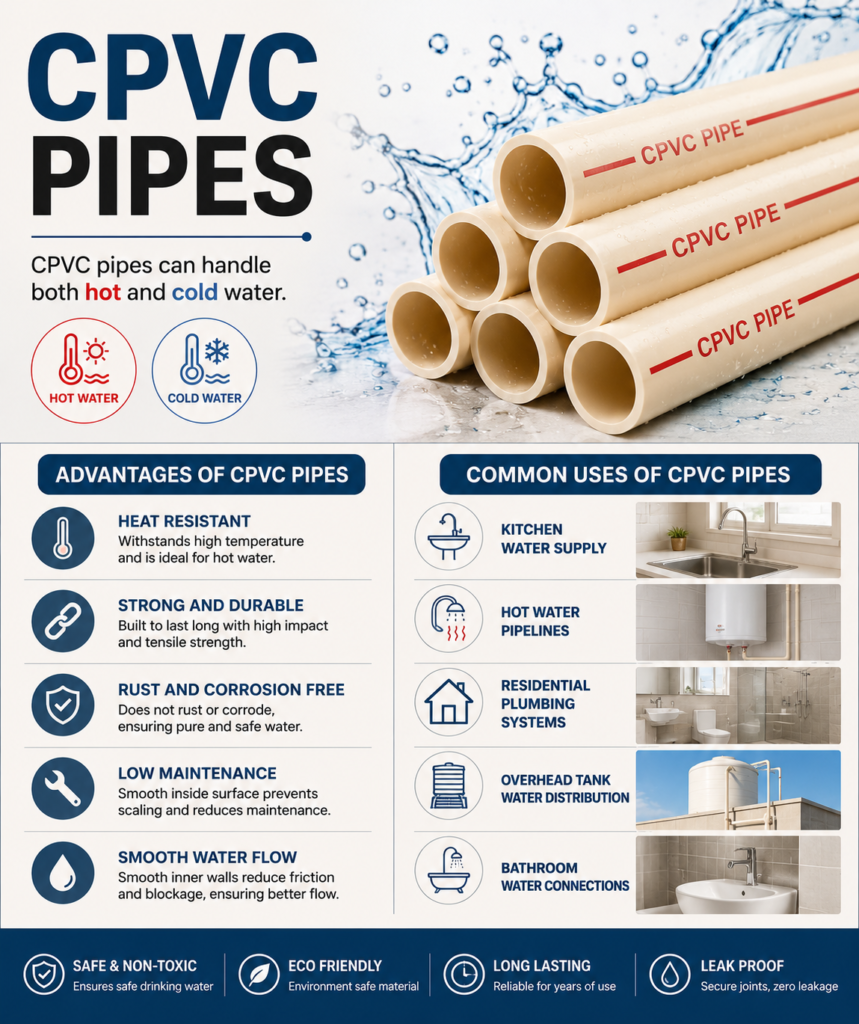
CPVC (Chlorinated Polyvinyl Chloride) pipes are designed to handle both hot and cold water, making them versatile for various plumbing needs.
Advantages of CPVC Pipes:
- Heat resistant, suitable for hot water
- Strong and durable for long-term use
- Requires low maintenance
Common Uses:
- Kitchen water supply
- Hot water pipelines
- Residential plumbing systems